

Schooling Alone
We’ve personalized our entertainment, news, and culture. Education may be next—and we may not fully understand what we’re giving up.

For most of American history, education was understood, however imperfectly, not merely as a private good, but as a common civic experience. In different schools and across states, students encountered many of the same books, historical narratives, ideas, and cultural touchstones, creating at least some shared intellectual inheritance. That world is rapidly disappearing. Artificial intelligence, personalization, and educational pluralism promise real gains in effectiveness, but they also present unprecedented challenges: What happens when education ceases to be something we meaningfully do together? Last week, I was invited to deliver the commencement address to the graduating class of Atlanta Classical Academy, a high-performing public charter school whose students, perhaps without fully realizing it, have participated in something increasingly rare: a shared intellectual experience rooted in the belief that there are still some things a free people ought to know in common – RP
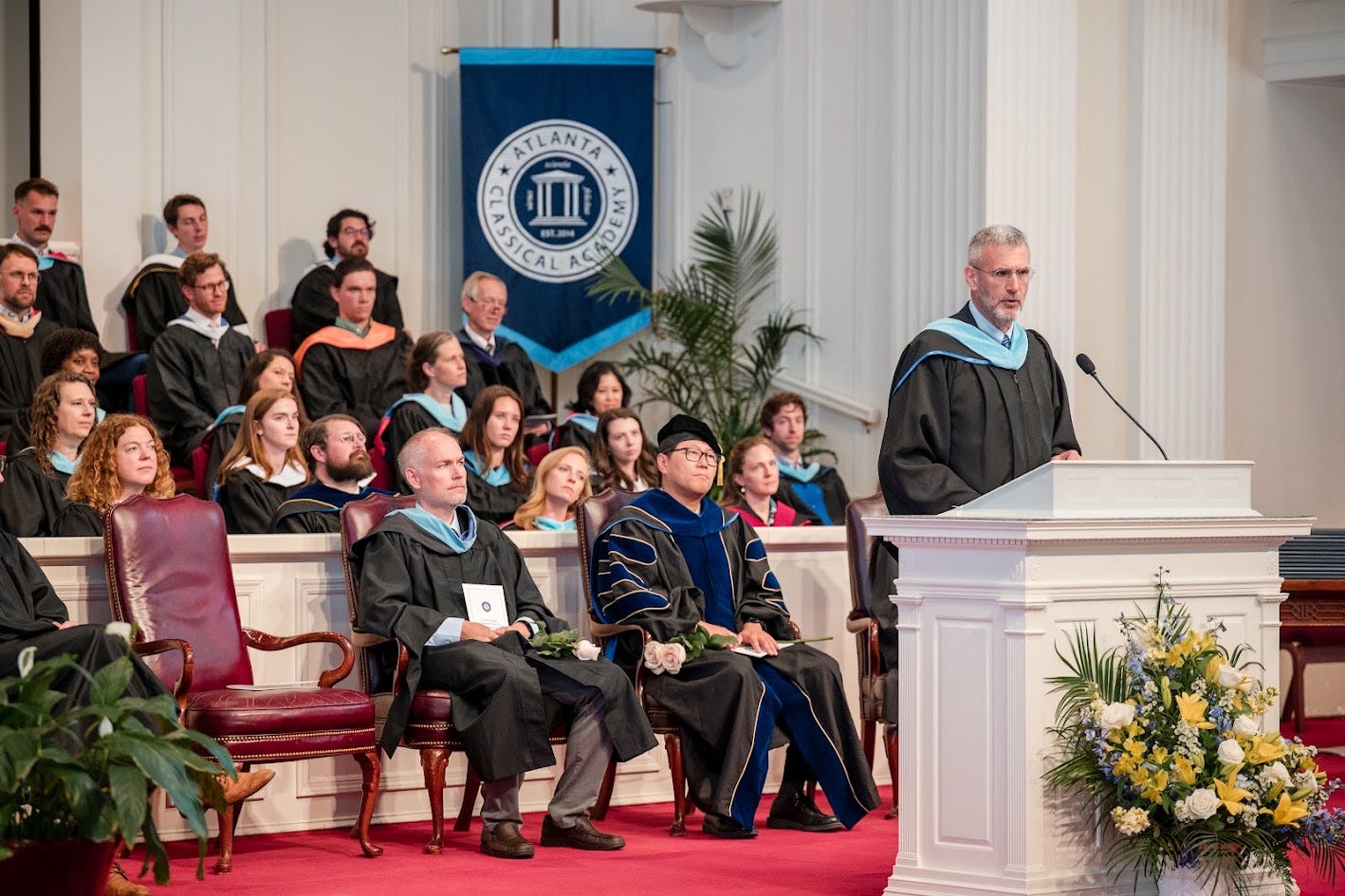
Good afternoon—and congratulations to the Class of 2026.
To the graduates: This is your day, and you’ve earned it. To your parents and families: You’ve earned it, too. And to your teachers: You know better than anyone what it took to get these young men and women to this moment.
It’s an honor to be with you.
Let me start with something that might seem unrelated to your education, but I promise is not.
When I was about your age, going to the movies meant something different than it does now. You didn’t open an app and scroll through hundreds of options. You went to a theater. There were a handful of films playing. You picked one—often with very little information—and you watched it with a room full of other people.
And afterward, you talked about it. Everyone had seen the same films. It gave you something in common.
Snippets of movie dialogue entered the language.
“May the Force be with you.”
“You can’t handle the truth!”
“I’ll be back.”
Even people who hadn’t seen the films often recognized the reference. Those little fragments of dialogue that pepper our conversations are more important than we tend to realize.
There was an assumption underlying those references: that other people would understand them. That we still possessed enough common culture to speak in shorthand with one another.
In other words, films were shared cultural touchstones—evidence that millions of people once inhabited at least some of the same imaginative world together.
Today, that’s changed. Now we live in a world of endless choice. You may not even “go to the movies” at all. You open a platform like Netflix, and it offers you something “just for you.” It knows what you like. It predicts what you’ll watch. It designs an experience tailored to your preferences.
We haven’t stopped watching movies. We’re watching more digital entertainment than ever. But we’re watching it alone, perhaps on our phones. And we’re not watching the same things.
At first glance, that seems like progress. More choice. More convenience. More personalization.
But something else has changed, too—something harder to see.
We have fewer shared experiences. Fewer things we can assume everyone knows. Fewer moments that bind us together in a common cultural life.
Now, here’s why I bring this up on your graduation day.
Because something very similar is happening in education.
For most of human history, education was a shared experience, at least for those who had access to it. Students in different schools, in different places, read many of the same books, studied the same history, encountered the same ideas. Not perfectly, not universally—but enough to create a sense that education was something we did together.
There was a common curriculum. A common sequence. A rough sense of what an educated person should know—and could assume others also knew.
It was less centralized than we often imagine. For nearly a hundred years, the McGuffey Readers, an elementary school collection of stories, poems, essays, and speeches, became nearly universal in American classrooms. Schools used them to teach phonics, vocabulary, literacy, and moral lessons. They became standard across schools and states not because politicians mandated them from Washington, DC, but because a common culture naturally reproduced itself through schools, churches, families, and other forms of civic life.
That model had real limitations. It could be rigid. It often failed to serve many students well. And for as long as I’ve been involved in education, we have been trying—often for very good reasons—to solve those problems.
We’ve asked teachers to differentiate instruction, to tailor learning to each student’s needs, interests, and pace. We’ve emphasized personalization. We’ve tried to make learning more relevant, more engaging, more responsive.
And now, for the first time, we have technology—artificial intelligence—that can actually deliver on that promise in ways no teacher possibly could. It can adjust explanations instantly. It can provide unlimited practice. It can meet each student exactly where they are.
That sounds like progress because, in many ways, it is. Some of these tools may genuinely help millions of students learn more effectively than schools have managed to do in the past.
But it raises a question—one that your generation will have to face and ultimately answer: If everyone is taught differently, what will you still share?
Education has always done two things at once: It gave us a common vocabulary and a common world. Your classical education means you have been given both.
A common vocabulary means you can understand one another. You’ve read the same texts, heard the same references, and know what they mean. You can participate in a conversation that stretches across time and place.
But a common world is something different. It means you’ve experienced something together. You’ve read the same books—not just heard of them, but wrestled with them. You’ve struggled with the same questions and ideas, sat in the same classrooms, and been shaped—at least in part—by the same things.
That matters more than we often realize.
Because a society depends not just on individuals who are well-informed, but on people who share enough in common to understand one another—to communicate, to cooperate, to live together.
In many parts of life, we still do the same things people have always done—but we do them alone. We watch alone. We listen alone. We scroll alone.
At this point, you might reasonably be thinking: This doesn’t sound like my experience.
And you’d be right.
In fact, what I’ve been describing is precisely what your education has resisted.
You have been educated differently.
You have read what others have read—and not just your classmates, but works that have been read for generations.
You have studied what others have studied.
You have been formed, in some small but important way, as part of a shared intellectual experience whose roots go back centuries.
You have not been taught in isolation. You have not been handed a menu of choices and asked to construct “my truth.” You’ve read the same books, studied the same ideas, and moved through a shared education with the people sitting beside you.
In an age that prizes customization, your school has insisted on something different: that some things are worth knowing, and worth learning together.
That’s not an accident. But please understand, as you leave this place, that it is not the norm.
It is, in a very real sense, a gift.
Now, some people might hear all this and observe—fairly enough—that you are graduating not from a traditional public school, but from a classical academy.
In one sense, that might make you part of the very fragmentation I’ve been describing. You did not attend the same school as everyone else. Your families made a deliberate choice to pursue a particular kind of education.
I understand that argument.
But I see something else here, too.
Because what your school chose to preserve was not educational isolation, but the idea that there are still some things a free people ought to know and have in common.
And this matters not only for literacy or culture, but also for citizenship itself.
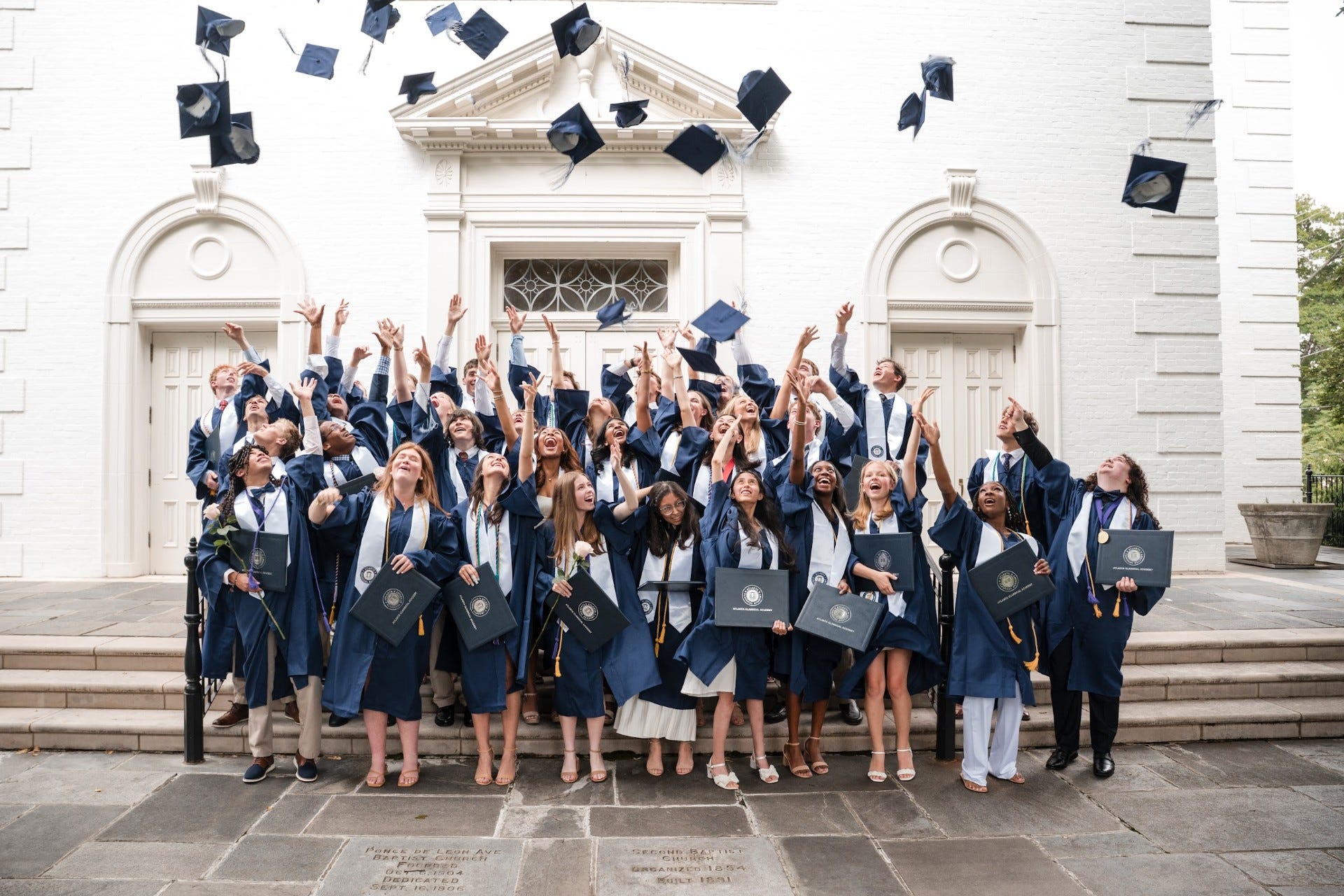
You are the Class of 2026. What a blessing to forever be associated with an historic year!
A few weeks from now, our nation will celebrate its 250th anniversary. And whatever our disagreements as Americans—and we have many—self-government depends on citizens possessing at least some shared understanding of the country they inhabit together.
It matters whether Americans know the stories, principles, documents, triumphs, and failures that shaped the nation they are arguing about.
It matters whether phrases like “separation of powers,” “equal protection,” or “a more perfect union” carry shared meaning and stir the soul.
Because democracies do not survive merely because people are free to speak. They survive because citizens possess enough shared knowledge and understanding to speak meaningfully to one another.
In sum, your education is about more than credentials, skills, or individualized achievement.
You have been initiated into a shared intellectual, cultural, and civic inheritance.
In that sense, whether you fully realized it or not, you have participated in something like a restoration effort.
Not a restoration of some imaginary golden age. American schools have never perfectly fulfilled the common-school ideal, and often fell painfully short of it.
But a restoration of the belief that education should help form human beings who can inhabit a common world together.
That idea is becoming less common.
Which means your responsibility is not merely to enjoy the benefits of your education privately for yourselves, but to carry this idea forward generously into the lives and institutions you will help shape.
Of course, like most gifts, the value of your classical education is easy to overlook when it is all you have known.
You will enter environments where a common culture is no longer the default—where people have read different things, learned different things, and often share less in common than you might expect.
You may discover this in small moments.
In a piece I wrote for a magazine not long ago, I compared a cognitive scientist to Cassandra. I wrote, “He must wonder who he has to sleep with to get people to listen.”
My editor nixed the reference.
Although, to be fair, it might be because I didn’t say “sleep with.”
But similar things will happen to you. You’ll describe a difficult problem as a Gordian knot, or quote “All the world’s a stage” or “Et tu, Brute?”—and be met not with knowing smiles but polite confusion.
You’ll quote Orwell or invoke Cincinnatus returning to his fields and realize the cultural shorthand no longer works.
You’ll refer to Plato’s Cave or joke, “Look upon my works, ye mighty, and despair.” You’ll mention the pride of Achilles, Augustine’s pears, Walden Pond, the Grand Inquisitor, Descartes’ wax held up to the fire, or Gatsby’s green light.
And suddenly, you’ll find that you have to explain the reference. You’ll realize that what feels ordinary to you has quietly become unusual.
Please don’t misunderstand me: This is not a reason for arrogance. It’s a reason for gratitude—and a reminder that what you have been given here is becoming less common than you might realize.
The question is what you will do with what you have been given.
No one decided this broader change should happen. There was no meeting, no vote, no moment when we agreed to move away from shared experiences in culture or education. The change came the way most changes do now—quietly, conveniently, one small improvement at a time.
More choice. More flexibility. More personalization.
Each step made sense. Each step felt like progress.
Only now are we beginning to see what those gains may be displacing.
We didn’t stop watching movies. We stopped watching them together.
And if we’re not careful, we won’t stop learning—but we may stop learning the same things. We may stop learning together.
You are entering a world that will invite you—constantly, subtly, persuasively—to make everything your own. Your feed. Your news. Your entertainment. Your education. Your life.
And there is something appealing about that. Something humane, even. Many of the changes I’ve described emerged for good reasons: to give people more opportunity, more flexibility, more agency over their own lives.
Some of those changes will improve education in ways my generation could only imagine.
But every gain carries a responsibility.
The question your generation will face is not whether the future will be more personalized, more technological, and more customized. It will be.
The question is whether, amid all that change, you will still believe there are some things worth experiencing together.
Some books worth reading in common.
Some ideas worth wrestling with collectively.
Some civic and cultural inheritance worth passing on.
Because a free society depends not merely on individuals pursuing their own paths, but on citizens who possess enough shared understanding to speak to one another, argue with one another, and ultimately live together.
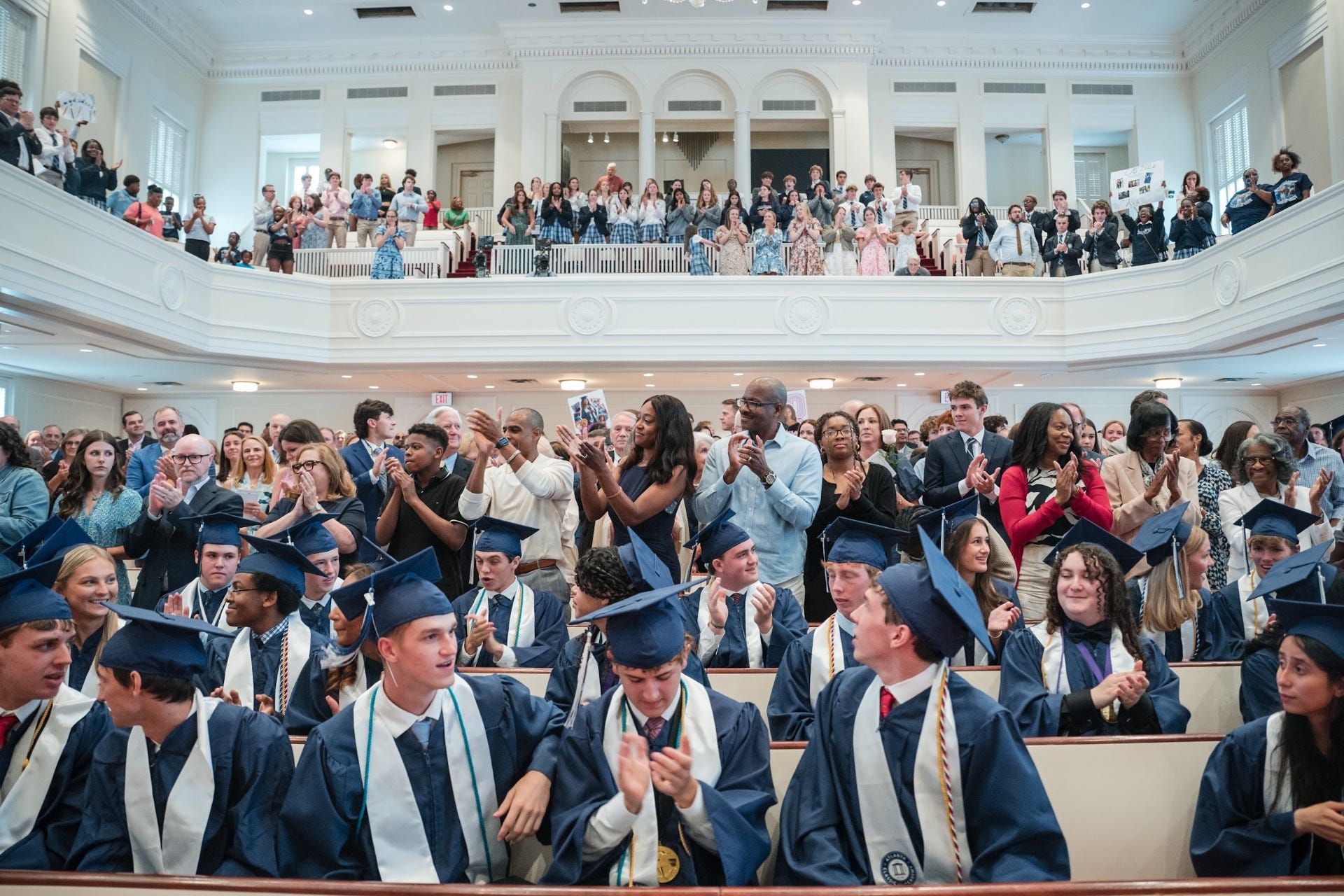
So here is my charge to you:
Take advantage of the extraordinary opportunities your generation will inherit. Use the tools. Embrace the innovations. Build new things.
But do not allow convenience, customization, or efficiency to become the highest goods in your life.
Continue to read the great books. Continue to seek out experiences that enlarge your world rather than merely reflect your own tastes and experiences back to you.
Continue to build friendships, communities, and institutions that bring people together around things held in common.
In short: Resist the temptation to live entirely inside a world designed just for you.
Because you have been given something increasingly rare: not merely an education, but a shared intellectual experience.
A common vocabulary.
A common world.
Hold on to it.
Build on it.
And wherever you go, help create it for others.
Congratulations, Class of 2026.
Your critique in "Schooling Alone" strikes at a profound truth: hyper-personalized education risks reducing a deeply human, communal journey into a data silo. It also refutes the Hippocratic cornerstone of an AI-infested social media teacher-buddy: "Thou shall mount no challenge to thy view of the world." As we witness in your remarks, Rob, true education doesn't just build isolated, individual skills. It weaves the external identities we share as citizens, parents, and neighbors, ensuring that the act of learning remains firmly anchored in the community it is meant to serve.
Beautifully said. I gave a speech to a group of college students a few years ago that mentions some of the same ideas (https://mattspivey.substack.com/p/theory-of-generational-distancing) and built a whole course for parents and teachers to help guide their kids through a history and reclamation of our shared culture, called "The American Mind: Understanding the Ideas that Shape our Nation" (https://www.english-champion.com/course-americanmind) if anyone reading here wants to extend these values further. I hope the kids in that audience keep your speech in their hearts and minds for many years to come.